Integrating Support Workflows into Product-Led Growth Strategies
Let’s be honest. In the world of product-led growth (PLG), the spotlight loves to shine on the product itself. On sleek onboarding, the “aha!” moment, and viral adoption loops. Support? Well, that’s often treated as a cost center—a necessary back-office function that kicks in when something goes wrong.
Here’s the deal, though. That’s a massive, missed opportunity. In a true PLG motion, where the product is the primary driver of acquisition, expansion, and retention, support isn’t a separate entity. It’s a core growth lever. Integrating support workflows directly into your PLG strategy transforms reactive help into proactive guidance, turning friction into fuel.
Why Support is Your Secret PLG Weapon
Think about it. A user hits a snag. They’re confused, maybe a little frustrated. That moment is a critical juncture. A traditional support model waits for a ticket. A PLG-integrated model sees this as a chance to educate, to unblock, and to deepen product understanding right then and there.
This isn’t just about being nice. It’s mechanics. Smooth, contextual support reduces time-to-value. It builds trust during the evaluation phase. And it surfaces priceless insights about where users struggle—insights that should directly feed back to product, marketing, and sales. Honestly, if your support team is siloed, you’re flying blind.
The Friction Points Where Support Belongs
So where do you weave these workflows in? It’s less about building a bigger help desk and more about embedding assistance into the user’s natural journey. A few key moments:
- The Free Trial or Freemium Fumble: A user on a usage-based limit hits a cap. Instead of a dead-end error, a proactive in-app message can explain the limit and guide them toward the upgrade path—with a direct link to a human if they have questions.
- The Feature Discovery Gap: Analytics show a user consistently using a basic workflow that could be automated by a premium feature. A subtle tooltip or a short, friendly video demo (served in-app) can act as a support-driven nudge toward expansion.
- The Onboarding Stall: They signed up, clicked around… and went quiet. An automated, helpful email sequence offering tips is a support workflow. Even better? An in-app checklist with a “Get Help” button on every step.
Building the Integration: Tactics and Tools
Okay, theory is great. But how does this actually work day-to-day? It requires a shift in tools and, more importantly, mindset.
1. Make Support Proactive and Product-Embedded
Ditch the “Contact Us” page as the first resort. Use tools like:
- Contextual Help Widgets: Think Intercom, Drift, or Crisp. But don’t just let them float generically. Trigger them based on user behavior (e.g., lingering on a page, repeating an action).
- In-App Resource Centers: A searchable hub of guides, videos, and docs that lives inside your product. Users never have to leave to find answers.
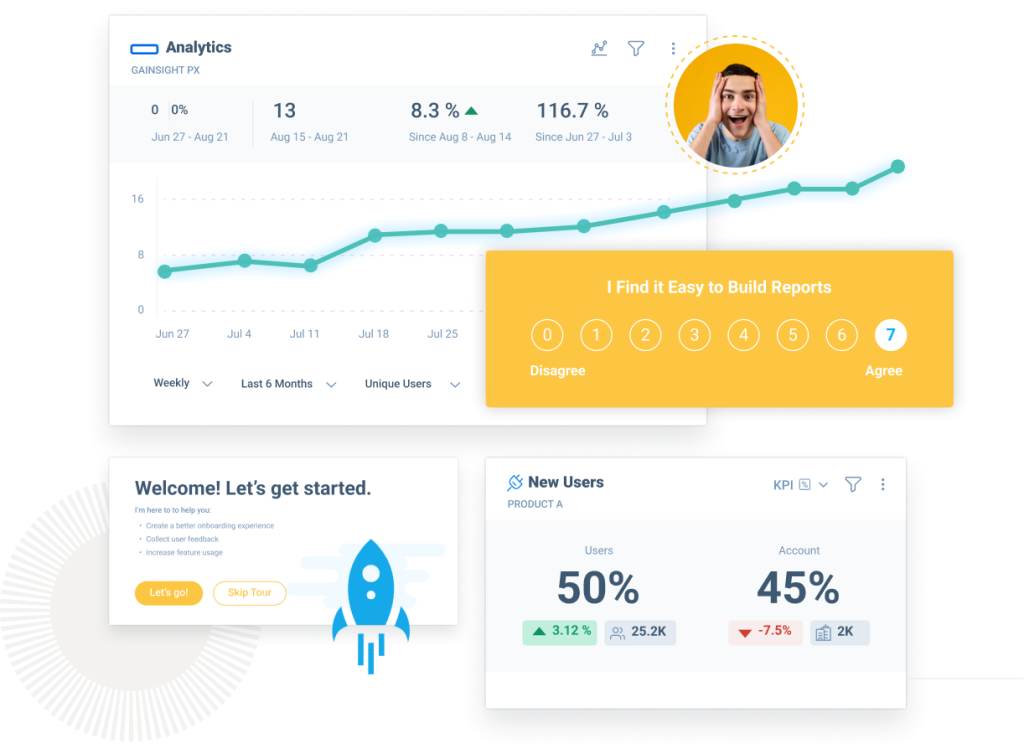
- Micro-surveys: After a user completes a key action, a one-question poll: “How easy was that?” Follow up immediately on negative responses.
2. Connect Support Data to the Product Core
This is the big one. Your support tickets are a goldmine of qualitative data. You need systems that connect this feedback to user profiles in your product analytics platform (like Amplitude or Mixpanel).
| Support Signal | PLG Action |
| Cluster of tickets about a specific feature | Trigger an in-app walkthrough for new users hitting that page. |
| A high-value account submits a technical question | Alert the sales/success team for potential expansion chat. |
| Freemium user asks about an enterprise feature | Tag the lead in CRM for a tailored outreach sequence. |
See the pattern? Support interactions become triggers for growth actions.
3. Empower Every Team with Support Insights
Break down the wall. Regular syncs between support, product, and growth teams are non-negotiable. Share trends: “We’re seeing a 30% increase in questions about data exports, which aligns with the drop-off we see at the end of the trial.” That’s a product roadmap insight, straight from the front lines.
The Human Touch in an Automated Flow
Now, a word of caution. Automation is powerful, but it can feel… cold. The goal of integrating support workflows into product-led growth isn’t to replace humans with bots. It’s to use automation to handle the repetitive stuff, freeing up your support pros for the complex, high-impact conversations that truly build relationships and save accounts.
A user getting a timely, automated solution to a simple problem is good. That same user being seamlessly escalated to a knowledgeable, empathetic human when they’re stuck on something thorny? That’s magical. That’s differentiation.
Measuring What Actually Matters
Forget just measuring ticket volume and first-response time. When support is a PLG lever, your metrics need to reflect growth. Track things like:
- Impact on Conversion Rates: Do trial users who interact with contextual support convert to paid at a higher rate?
- Feature Adoption Post-Support: After a support interaction about a specific feature, does the user’s usage of that feature increase?
- Reduction in Friction Signals: Are negative feedback surveys, onboarding drop-offs, or support tickets decreasing in key friction areas you’ve targeted?
This shift in measurement is crucial. It aligns the support team’s success with the company’s growth goals. You know, it makes them heroes.
The Bottom Line: It’s a Culture Thing
Ultimately, integrating support workflows into your product-led growth strategy isn’t just a tech stack project. It’s a cultural one. It requires everyone—from the CEO to the product manager to the support rep—to view every user question, every hiccup, not as a nuisance, but as a strategic opportunity.
It’s about building a product that doesn’t just sell itself, but also helps and teaches itself. A product that learns from its own support gaps and evolves. Because in a crowded market, the product that feels the most helpful, the most intuitive, and the most… well, supportive, often wins. Not by accident, but by design.